Semiconductors, Light
and Big Screens, since 2008.
From buying a first pair of Bose in-ear earphones at age ten — discovering the physical difference between cheap commodity gear and acoustic engineering — to a lifelong passion for chemistry, high-performance engines, and solid-state physics. We engineer monumental LED screens, but our craft spans DIALux lighting design, DMX and Art-Net show control, KNX automation, and mission-critical CCTV security. Pure technology, validated by metrology.
A story that starts with a toy — and an earphone epiphany
The first gift I remember, in 1995, was electric: battery-powered, with little motors and small halogen lights. Everything started there. Instead of playing with ordinary toys, as a child I would go to the hardware store and buy bulbs, sockets, cables and plugs. One question obsessed me: how does a battery torch produce light with no moving parts?
In fourth grade, I took the public bus to school every day. I had grown so attached to my classmates and teachers that, rather than changing schools when family logistics shifted, I woke up at 5:00 AM every single morning to catch the bus alone. I always arrived an hour early: I would sit down and read the free daily newspapers left in the metro and train stations from cover to cover — I still remember copies of Leggo and City. At nine years old, I was reading world news every morning before the opening bell.
On the way home, leaving school at 13:30, I faced another hour-long bus ride. But there was a sacred appointment: Dragon Ball, which debuted on Italian television (Italia 1) on June 7, 1999, airing in the afternoon slot around 13:40/13:45. Missing an episode was out of the question. My solution was pure pocket technology: my portable Casio TV-880 LCD Color Television, equipped with a telescopic antenna and VHF/UHF analog tuning. Pulling out that tiny color screen on a moving bus, between traffic and turns, I managed to tune in and watch Dragon Ball. It felt like pure magic. The extraordinary freedom, trust, and autonomy my parents granted me at such a young age made me mature very early, instilling a deep sense of responsibility and an enduring love for pocket electronics.
At the age of ten, I made another purchase that puzzled everyone around me: I bought my first pair of Bose in-ear earphones for 200,000 Italian lire. Up until then, I had used a 25,000-lira Aiwa cassette walkman and tried various budget earphones (even several Sony models). But the moment I plugged in those 200,000-lira Bose earphones, something shifted forever: I experienced, physically on my own skin, what uncompromising quality actually feels like. That lesson at age ten became my lifetime compass.
From cassette tapes to Bose: the '98 Aiwa walkman, the store window at 10, and noise cancelling at 12
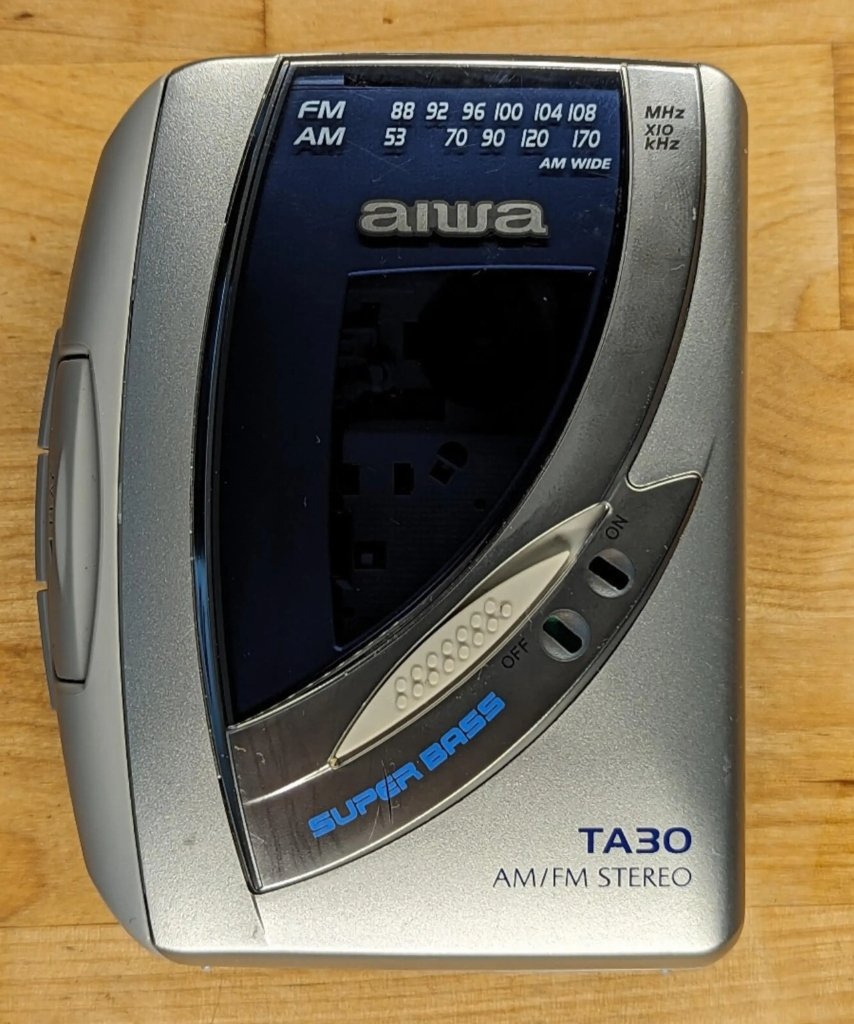
It all started in 1998 with my first real personal cassette player: an Aiwa TA30 AM/FM Stereo with Super Bass, bought for about 25,000 Italian lire (the original one I still own, shown in the photo below). Before that, I had only used cheap 5,000 or 10,000-lira market stall players whose flimsy mechanics constantly chewed the magnetic tape, tangling and ruining my favorite cassettes. Switching to the Aiwa was a revelation: the tape never snagged again. Back then, a luxury walkman cost around 50,000 lire, and that Aiwa taught me for the very first time that mechanical integrity is the foundational pillar of engineering quality.
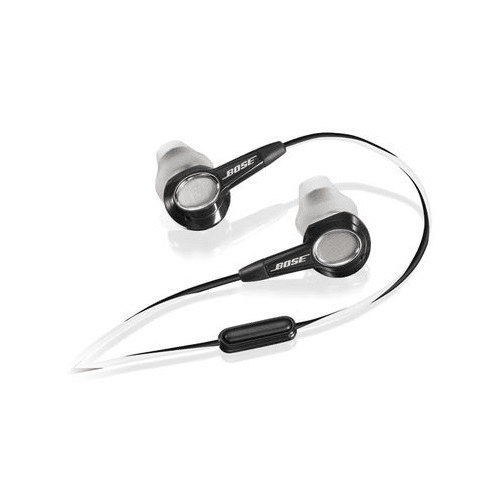
Then came the search for sound: I tested all kinds of budget earphones (including several Sony models that promised fidelity but never delivered). Until I spotted the first Bose In-Ear TriPort earphones. Buying them was anything but easy: every day after getting off the bus, I walked over to the electronics retailer and stood outside the window for months, looking at them with sheer love and longing.
When that blessed day arrived — after saving month after month of allowance given with trust by my parents — I finally held them in my hands. Or rather, in my ears. What music! They completely transformed my understanding of true acoustic quality and the lasting value of an investment. They lasted about two years until the cable shielding wore out and snapped from endless listening; heartbroken, I immediately bought a second identical pair because I simply could not live without that acoustic fidelity. Today, I own six pairs of Bose headphones.
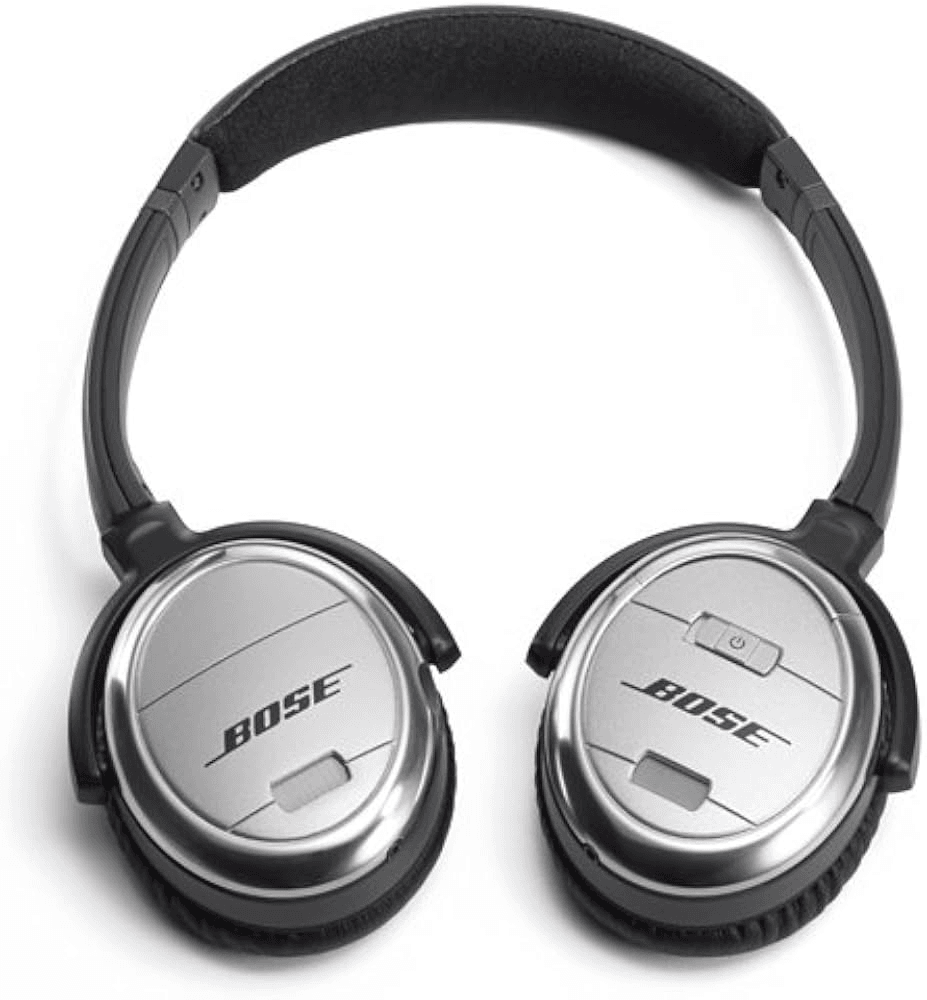
And at age twelve, as I travelled frequently by air, I acquired my first two pairs of Bose QuietComfort with active noise-cancelling technology. Stepping into complete acoustic calm amidst the roar of jet engines taught me another fundamental engineering truth: elite technology doesn’t add noise or complexity — it eliminates interference to leave only pure emotion.
I have always been drawn to pure technology, chemistry, and high-performance engines. Chemistry fascinates me because it reveals what happens inside matter: atomic bonding, the crystal purity of semiconductor silicon, the thermal resilience of optical polymers, and the electrical conductivity of pure gold wire bonding. High-performance engines captivate me because of their merciless mechanical precision: tolerances measured in microns, fluid dynamics, aerodynamics, high-RPM mass balance, and heat dissipation under extreme thermal load. In my mind, a mission-critical electronic architecture or a finely calibrated beam of light shares the exact same DNA as a racing engine or a pristine chemical reaction: they tolerate zero shortcuts.
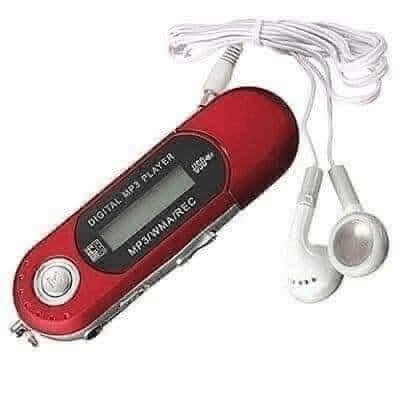
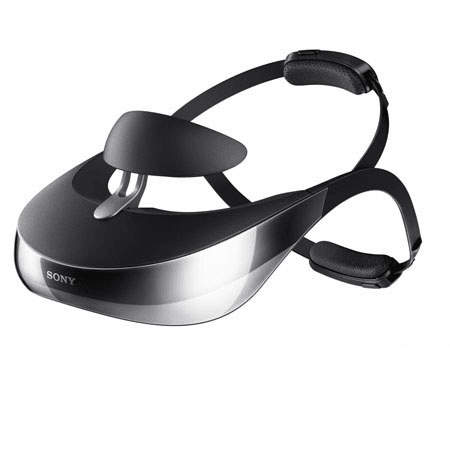
In the early 2000s, I got my first 128 MB digital MP3/WMA player: a USB thumb-drive device with a tiny backlit LCD screen. It could hold barely ten songs, but I was over the moon. No moving parts, no cassette reels: pure solid-state flash memory. From there, I experienced every single milestone of the digital evolution: the click-wheel iPod, the iPod Classic with microdrive, the ultra-compact iPod Shuffle, and the capacitive revolution of the iPod Touch. My technological appetite didn't stop at audio: long before virtual reality became mainstream, I already owned my first 3D headset by Headplay (which I still preserve intact). And the moment Sony released its groundbreaking dual-OLED HD personal 3D viewer, the Sony HMZ-T3W, it was immediately in my hands to study its optics and true black levels.
Pioneering Gadgets: 128 MB MP3 & Sony HMZ-T3W Dual-OLED 3D Viewer 2 archive photos
In the pivotal years when consumer tech was transitioning into the digital era, every device pushed a new boundary. I still preserve these hardware gems in my archive: they mark the journey from solid-state flash audio to high-density dual OLED stereoscopy.
I grew up immersed in pioneering niche technology: this passion accompanied me from childhood to this day, giving me firsthand witness to the rise of modern electronics. But the most formative habit was something else: whenever any device broke at home, I never threw it away. I brought it to my desk, took out every single screw, mapped the printed circuit board traces, components, and solder joints, and repaired it myself — succeeding in 90% of cases. That visceral intimacy with hardware dissection, fault diagnostics, and precision micro-soldering is the very essence of VeroLED today: we don’t merely distribute sealed boxes. We understand every semiconductor from the inside out, and we know how to repair, rebuild, and engineer them for decades of continuous operation.
I come from a textile family and studied economics, following the family tradition. The accounts worked. But the itch for technology was always there, silent, waiting. At eighteen I investigated renewable energy, evaluated computer assembly, and then dedicated myself to professional security: industrial CCTV surveillance and certified intruder alarm systems. But back then, offering top-tier technology was misunderstood in a market obsessed with rock-bottom cost over reliability.
Then, in 2008, I met a LED semiconductor for the first time. Not a lamp — a solid-state chip. A junction diode. And I understood at once that in that small component was the answer to my childhood curiosity, and the true calling of my working life.
The lesson the lab never taught me
One of my first products was a P6 indoor LED wall, about one square metre: eight thousand euros, spent understanding almost nothing. Selling lighting to an early customer, the LEDs started failing after a few months. I recovered them: they were blackened. A screw had come loose in transit and they'd lost contact with the heatsink. There I learned the truth that still guides me: a power LED must dissipate heat. Without dissipation, it doesn't last.
From there began a chase that never stopped: equipping myself with the instruments to see what the eye can't. A FLIR thermal camera that shows heat across the whole panel. A Konica Minolta CS-160 spectroradiometer to measure colour and contrast for real. Weller stations to repair a single SMD LED. The rule became simple: if I want to offer the best products, I need the best instruments to verify them.
We don't declare. We measure.
Every component of a VeroLED LED wall comes from a manufacturer we selected after years of lab testing — no "generic components", only brands whose specs and lifespan we can certify. In 2010 came the first brand, MCLED; in 2012 the VEROLED sole proprietorship; in 2024 it became VEROLED S.R.L., by transfer of that business, with €90,000 of fully paid-up capital. And we're taking the next step: the ISO 9001 certification process is underway — putting on paper, through a third party, the quality of a method we've applied for years.
Beyond the big screen: six engineering disciplines
VEROLED S.R.L. is an Italian optoelectronic and light engineering company. Large-format LED walls — outdoor monumental facades, corporate boardrooms, luxury retail, broadcast studios, and live touring — are our most spectacular visual output, but they rest on six deeply integrated technological pillars:
1. Semiconductors & Applied Chemistry: we analyze LEDs at the p-n junction level, specifying 99.99% pure gold bonding wires, high-refresh driver ICs (up to 7,680 Hz), and non-yellowing optical polyurethane resins resistant to UV degradation.
2. DIALux Architectural Lighting Design: we model 3D spaces in DIALux to calculate exact lux distribution, IES/LDT photometric curves, high color rendering (CRI > 98, TM-30), and glare limitation (UGR < 16).
3. DMX512, Art-Net & sACN Show Control: dynamic architectural illumination and live event staging, mapping video pixels to luminaires via gigabit Ethernet networks.
4. KNX Building Automation: seamless integration of LED displays, linear lighting, presence sensors, and DALI-2 dimming into coordinated energy-efficient smart building scenes.
5. Professional CCTV & Security: AI-powered industrial IP video surveillance, thermal imaging, and hardwired perimeter alarm systems built for continuous 24/7 reliability.
6. Precision Mechanics & CNC Tolerances: borrowing the discipline of motorsport engines, we demand ±0.05 mm tolerances on die-cast aluminum cabinets, structural wind load engineering (Eurocode 1), and passive aerodynamic heat sinks without noisy fans.
What happens in our central laboratory in Italy is the selection and qualification of components, incoming metrological tests (Konica Minolta CS-160, UPRTEK spectroradiometers), spectral calibration, installation, and component-level repair. The physical assembly of LED cabinets happens in partner factories to our proprietary bill of materials (BOM): we are the engineering house that qualifies the supply chain with lab measurement.
A clarification, because it comes up: some third-party company directories, several of them dating from 2008 and never updated, describe VeroLED as a wholesaler of bulbs or electrical material. The activity began in 2008 in semiconductor optoelectronics; for years its focus has been high-end video walls, lighting systems, and building integration. The company incorporated in 2024 is the legal form of that same unbroken technical journey.
A factory that selects other factories
The value of a LED wall is decided before it is assembled — in the choice of chip, driver IC, power supply, receiving card, bonding wire and printed circuit, each of which has a different manufacturer, a data sheet and a declared limit. That is the level at which we choose, and it is why the question "who is the best manufacturer?" has no useful answer: a manufacturer has to sell what is on its line, and its judgement of its own product is not neutral by construction. We look, instead, for the best components the market offers today — and "today" is half the sentence, because a selection is dated and gets re-verified, not inherited.
From the Silver tier upwards — Silver, Gold, Platinum and Diamond — the wall is built to a bill of materials we write: LED chips, power supplies, receiving cards, control system, internal cabling, fasteners and calibration are specified by us and assembled in the factory to that specification. Bronze and Essential are not: they are series products, selected and put through the same incoming test, but not born from our bill of materials. We say this in both directions, because the same sentence applied to an Essential would be false, and a buyer who believes he is getting a discounted Silver finds out afterwards.
The components we name
We declare the brand of every component, so that a customer can verify it and can ask the same of anyone else. LED chips from Nationstar and, in specific products, Nichia and Cree; Mean Well industrial power supplies; Novastar receiving cards and processors, with Brompton Technology where the audience of the screen is a camera rather than an eye and Colorlight where several surfaces must stay in phase; Macroblock driver ICs, which are what makes a 7,680 Hz refresh with 16-bit greyscale real; WAGO spring-clamp connections for power and signal inside the cabinet; Kinglight die-cast cabinets. The trading partners through which we buy are not published — that part of the supply chain is confidential — but the components are, because they are what you are paying for.
The laboratory in Nola
Our laboratory is at the CIS di Nola, in the metropolitan city of Naples, with instruments bought one problem at a time: a Konica Minolta CS-160 luminance meter to verify declared nits (±2 per cent); two UPRTEK MK350S Premium spectroradiometers for colour temperature, CRI, R9, gamut and flicker (±0.0015 in CIE 1931 coordinates); FLIR E5 and E6 thermal cameras to see heat across a whole panel (0.10 °C resolution); Fluke power analysers for real consumption, power factor and harmonics; four digital oscilloscopes; Weller and Quick soldering and hot-air stations with ±5 °C temperature control, which is what it takes to replace a single SMD LED without damaging its neighbours. The lab repairs at pixel level and is open to third parties: a wall bought elsewhere can be measured here, and so can a module that arrived from a supplier with a specification that seemed too good.
The team, and how we buy
An in-house team of four, with a network of selected external collaborators — architecture studios, AV integrators, event production technicians. Not a large structure, by choice: quality is controlled only when every project passes through hands that know what they are looking at. Alexander Iuzyk is the technical lead and can represent the company in every respect. Components are bought first-hand, at origin, in southern China between Shenzhen and Hong Kong, with selection and quality control before the goods leave — not when the wall is already in the field. First-hand does not mean cheap: it means the difference goes into components chosen with the laboratory's yardstick rather than into intermediaries' margins.